After the Revolt: How the Body Cools Down
What you’ll learn
By the end of this lesson, you will be able to:
- 1Describe the direction of heat flow between hot and cold objects.
- 2Identify conduction, convection, and radiation in cool-down situations.
The player pauses at checkpoints to test your understanding. Too fast? Tap the speed button to slow the narration, use 10s to hear a part again, and keep subtitles on to read along.
Subtitles appear here while the video plays.
Read the full transcript
When fluids move, there’s always a driving force behind them – specifically, a difference in either pressure or velocity.
With heat transfer, the driving force is a difference in temperature.
In fact, if you don’t have a temperature difference, you can’t have heat transfer. Period.
If you have two boxes right next to each other, and they’re both at the same temperature,
then one of the boxes won’t randomly start giving its heat energy away to the other one.
But if you're watching this video on your laptop and it’s, well, on top of your lap,
then your legs might be warming up as heat is transferred to them from your laptop.
That’s because right now your laptop is warmer than your skin, and when heat passively transfers,
it always moves from a higher temperature to a lower one.
You'd have to use the cycles and work energy we’ve talked about before – basically, an engine – to make it move in the opposite direction.
But there’s a lot you can do to slow down the process.
There are three main types of heat transfer to look out for: conduction, convection, and radiation.
With conduction, heat energy is transferred by the collisions of molecules or other particles.
When two things touch, the faster moving molecules of the warmer object crash into the slower moving molecules of the colder object,
transferring energy that heats them up.
In your house, that will cause heat transfer through the layers of the walls.
Which brings us to the second method of heat transfer:
convection, the transfer of energy by the physical movement of a fluid – which in engineering, can be a liquid or a gas.
As a fluid moves against or across a surface, it can add or take away heat.
For example, as air heats up, its particles spread out, lowering its density.
That warmer air rises, taking heat energy with it, and is replaced by cooler, denser air.
That’s called natural convection, because variations in the temperature of the fluid create natural movement without any external forces.
There’s also forced convection, where something external like a fan or the wind moves the fluid.
Heat transfer by convection actually involves some conduction, especially at first.
But you can reduce the effects of the last type of heat transfer: radiation.
Radiation is the transfer of energy in the form of electromagnetic waves –
and in this context, we’re talking about any electromagnetic waves, not just the cancer-causing kind.
You feel this radiation every time you walk outside and bask in the sun or warm up by a fire.
Unlike conduction and convection, radiation can happen without any contact between the heat source and the object.
That’s why heat energy from the sun is able to reach the earth.
Reflective coatings can help reduce the heat transfer from radiation a little since they absorb fewer electromagnetic waves.
Quiz Checkpoints
The video says heat always flows from a higher temperature to a lower one. After the reenactment, a performer's skin is 37 °C and the evening air is 28 °C. Which way does heat flow?
The video says conduction happens when two things touch. After the performance, a performer sits on the cool gym floor and heat flows from their body into the floor. Which type of heat transfer is this?
The video calls it forced convection when something like a fan or the wind moves the air. A trainer tells performers to keep moving slowly during cool-down. Which type of heat transfer does the moving air help?
The video says radiation needs no contact. Resting performers feel warmth on their faces from torch fires a few meters away. How does this heat reach them?
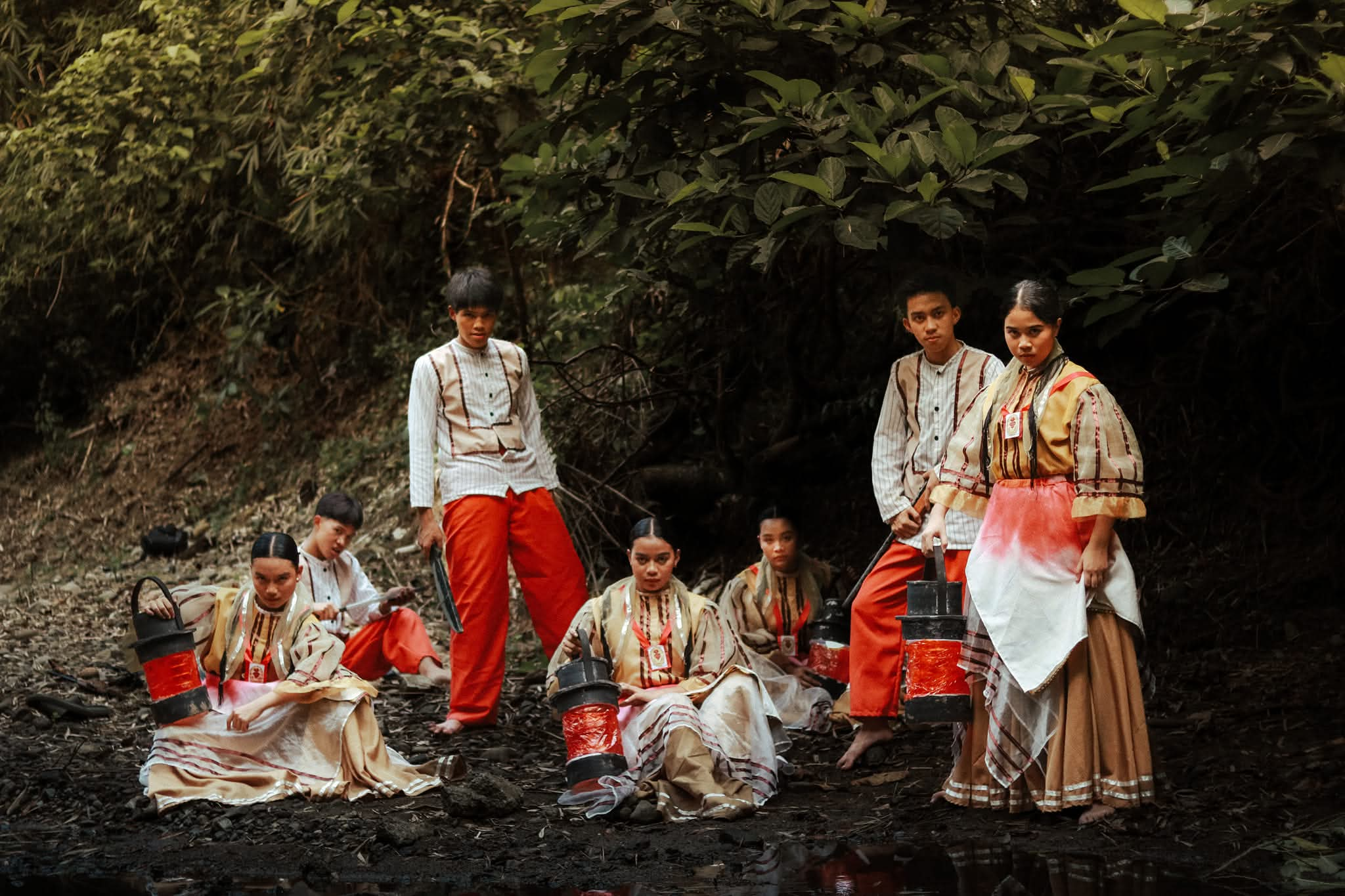
See It in the Festival
The same physics, in the Cry of Jelicuon.